- info@alshakreen.net
- 920006040
24-01-2024
27153
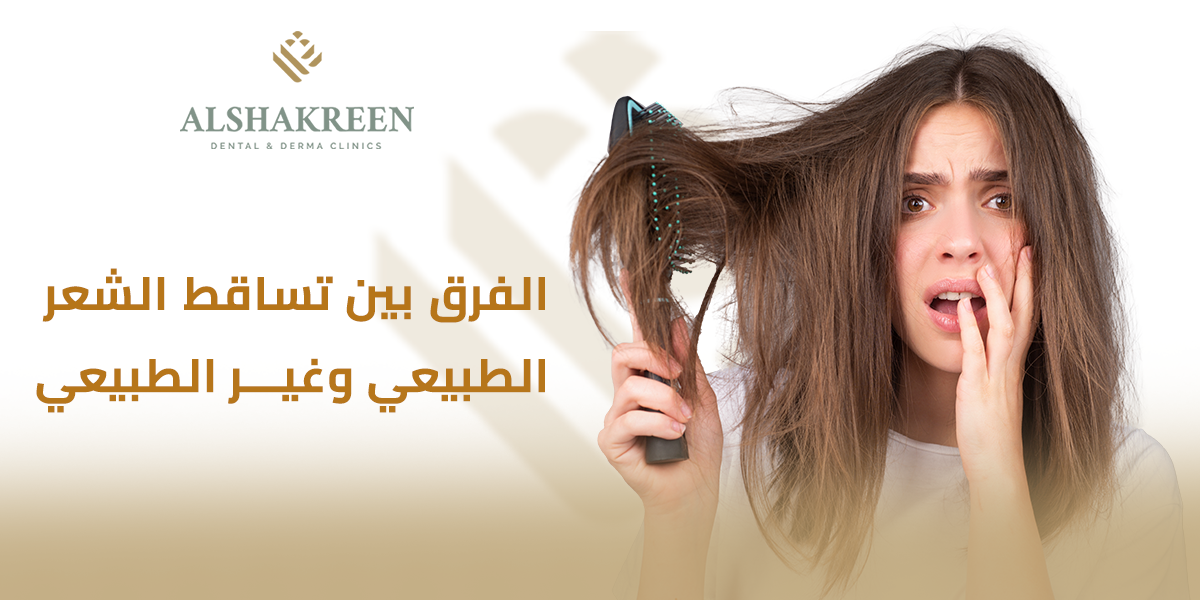
In an era in which the pace of life is accelerating, and health and beauty challenges are increasing, this article comes to shed light on one of the issues that concerns many women, which is hair loss.
We expertly identify the causes and types of hair loss, and provide valuable advice and effective solutions to maintain the beauty and health of hair.
What is the rate of hair loss related to?
The scalp consists of hundreds of thousands of hairs, and each hair has a lifespan of between two and five years.
The final stage of the hair life cycle is called the shedding stage, when the hair is at rest and preparing to separate from the scalp. This phase lasts for a few weeks before the hair begins to grow again.
Studies indicate that women have a hair loss rate of 40% more than men every day, which is normal, but is affected by their styling methods and their rapid impact on psychological events and hormonal changes.
It is worth noting that hair loss is related to multiple factors, the most important of which are: nutrition, stress, types of lotions and shampoos, daily styling methods, and others.
The difference between normal and abnormal hair loss
Hair loss affects the scalp or the entire body, whether the condition is temporary or permanent, and hair loss often stops spontaneously if there is no pathological reason that prevents this.
The body usually adapts to its condition, whatever it may be. If it is exposed to an event that leads to hair loss, this loss may stop within six to nine months, and the hair gradually returns to its natural state after this adaptation.
The main difference between the two cases is that you notice a difference in the appearance, beauty and density of your hair, and if it has changed recently, this is an indication that it is falling out in excess of the normal limit.
Natural hair loss
Losing about 100 hairs a day is normal, according to the American Academy of Dermatologists, and for women with long hair, it may be significantly more than for men.
Because a person has approximately 100,000 hair follicles on the scalp, losing 100 hairs remains unnoticeable.
Abnormal hair loss
There are several different types of abnormal cases of hair loss, the most prominent of which are:
Anagen effluvium: This occurs severely and clearly when something stops hair growth.
Telogen effluvium: This is excessive hair loss that occurs when the body is exposed to certain events or psychological stress.
A famous example of telogen effluvium is women who experience excessive hair loss about three months after giving birth. This situation reflects that the phase does not directly affect the body.
Causes of abnormal hair loss
The cause varies depending on the type of precipitation occurring. If it is telogen effluvium, its causes are usually:
Sudden, significant weight loss: When the body loses significant weight, hair loses its essential nutritional resources, leading to hair loss.
Pregnancy and stress: Body stress during pregnancy or breastfeeding and the stress that accompanies this period can lead to hair loss, in addition to nutritional deficiencies and hormonal disorders.
Excessive stress and psychological trauma can also cause excessive hair loss.
High body temperature as a result of severe or chronic inflammation, which appears in the form of sudden and severe hair loss.
Sudden hormonal changes, such as when you stop using birth control pills.
Some medications and treatments, such as chemotherapy or radiation, and surgeries can cause severe hair loss.
If it is an ingrown hair loss, its causes are usually:
Hereditary hair loss: It appears in some men noticeably, and they witness a receding hairline, while women notice a gradual decrease in hair density.
Hairstyles that cause weakening of the hair follicles, such as excessive pulling or heavy styling, can lead to hair loss.
Immune diseases, such as lupus erythematosus, where the immune system attacks hair follicles and causes hair loss.
Harsh hair care products, excessive hair washing, use of dye and heat styling can also affect the amount of hair loss in the long term.
Trichotillomania, which can cause hair follicle damage and severe hair loss.
Understanding these reasons can help you take the right steps towards taking care of your hair and keeping it healthy.
When is hair loss a concern?
Hair loss is often not a cause for concern, but in some cases, it indicates a health condition, such as: anemia, hypothyroidism, etc.
Our clinic doctors advise you to go and seek advice if hair loss is accompanied by one of the following symptoms:
Loss of eyelashes or eyebrow hair; This may indicate autoimmune alopecia.
Itching and rash; It can be an indicator of autoimmune diseases, such as lupus.
Persistent muscle pain; If these symptoms coincide with fatigue and hair loss, they may indicate hypothyroidism and possible hormonal imbalance.
constant fatigue; Hair loss associated with inactivity indicates poor nutrition or lack of nutrients.
Broken and weak nails; It can be a sign of iron deficiency, especially in cases of anemia.
Hair loss analyzes and tests at Al Shakreen clinics
Blood sample analyzes can help determine the cause of hair loss, the most important of which include:
Checking ferritin levels, which is a protein that indicates the amount of iron stored in the body.
Hormonal tests, such as: DHEA, testosterone, androstenedione, prolactin, and thyroid hormones (T3, T4, TSH).
Vitamin and mineral levels.
Doctors also diagnose cases of hair loss through several tests, including:
Pull Test: This is a test that measures the severity of hair loss in a simple manner by pulling or tugging lightly on approximately 40 strands of hair. If the number of fallen strands exceeds six, this is an indication of the presence of active hair loss. You must know